
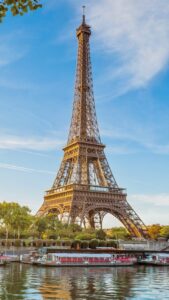
Discover the Eiffel Tower on a journey to the clouds like none other in the world. You’ll be swept away by emotions and adrenaline, from the esplanade to the top, whether day or night The Eiffel Tower welcomes visitors every day, including in the evening. At nightfall, it lights up and sparks every hour until closing time arrives, when it turns off. There are three: the first floor, the second floor, and the top. Visitors can either purchase tickets in advance from our official online ticket office or on site the day of their visit at the ticket office located on the esplanade below the Eiffel Tower. You can reach the top (by elevator only, or by elevator, then stairs). At the top,enjoy the most impressive 360° view of Paris, at a height of 906 feet. On the second floor, you have two levels and plenty of space to explore. On the first floor, you will find a bar, a buffet, shops, and a kiosk serving drinks, including champagne. Enjoy a meal or snack on-the-go at the bistro or on the terrace.
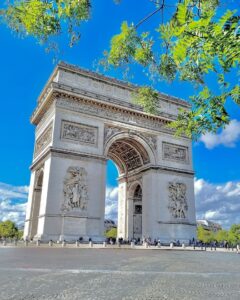
The Arc de Triomphe carries within it the deepest symbolism of the Republic: the liberation of the people. The arc of the two large facades reaches more than 20 meters high with a width of 14.50 meters. A large frieze adorns the four facades of the Arc and represents the great figures of the French Revolution and the Empire, as well as the return of the Napoleonic armies from Italy and Egypt. There are also many places to visit around the monument.
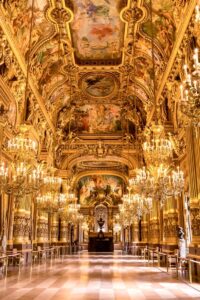
With more than 350 years of history, the Paris Opera is renowned for its qualitative and wide programming, both at the Palais Garnier and the Bastille Opera House, but also for the unique architecture of its two theaters open to visitors during the day. With more than 400 curtain raises per year, the Paris Opera offers rich ballet, opera, and concert programs, as well as programming specially made for a younger audience. Greeting new audiences remains at the heart of the Paris Opera’s mission. To do so, the institution is always developing new projects to share and better communicate the taste and discovery of opera and dance.
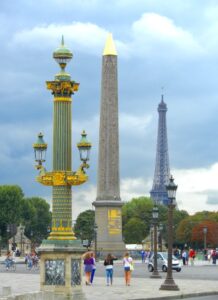
Place de la Concorde is situated at the end of the Champs-Elysées. Today, it is famous for the Luxor, the surrounding prestigious hotels, and the two monumental fountains. Created in 1772, Place de la Concorde was originally known for having been an execution site during the French Revolution. Louis XVI and Marie-Antoinette were guillotined here. Between 1836 and 1846, the architect Jacques-Ignace Hittorf redesigned the square to become what it is today.

Located on the outskirts of Paris, the monumental Grande Arche de La Défense is a 20th-century version of the Arc de Triomphe. Instead of celebrating military victories, the monument is dedicated to humanity and humanitarian ideals. The Grande Arche is both a real building housing offices, exhibition rooms, etc., but also a real monument whose foundations, structures, and spans raise technical difficulties worthy of a very large construction project. I highly recommend the experience. It was a nice surprise to see that the view was nice and quick to access.

The Pantheon is a must-see when you visit Paris, both because of the imposing architecture and, finally, with respect to the people that made France and the world a better place. The Pantheon’s architectural design is a testament to the genius of Roman engineers. Its massive concrete dome, the largest unreinforced dome in the world, remains a mystery for architects and engineers even today. With painted frescoes, mosaics, and paintings depicting Saint Genevieve, key moments of French history, and scenes from the revolution, the Panthéon has stunning art.
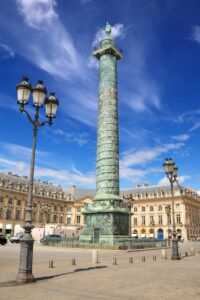
Place Vendôme was built on the orders of Louis XIV as a grandiose setting that would embody absolute power in the very heart of Paris. Napoleon replaced the statue of the king, dismantled in 1792, with a bronze column made from 1,200 enemy canons. During the Second Empire, however, the octagonal square, a marvel of classical urban design, gradually became a showcase for luxury goods rather than political power. The world’s great jewelry brands have turned Place Vendôme and the adjoining Rue de la Paix into one continuous stream of window displays filled with sparkling diamonds, rubies, and emeralds
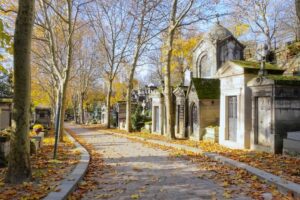
The Père Lachaise cemetery takes its name from King Louis XIV’s confessor, Father François d’Aix de La Chaise. It is the most prestigious and most visited necropolis in Paris. Situated in the 20th arrondissement of Paris.The cemetery is a mix between an English park and a shrine. All funerary art styles are represented: Gothic graves, Haussmanian burial chambers, ancient mausoleums, etc.
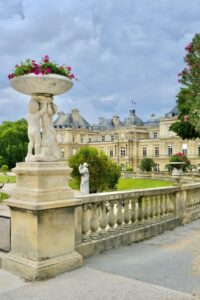
The gardens feature prominently in Victor Hugo’s novel Les Misérables. It is here that the main love story of the novel takes place, as the characters Marius Pontmercy and Cosette meet for the first time. Several scenes from André Gide’s novel Les Faussaires also take place in the gardens. It has something for everyone. Sure, there are trees and gardens galore, but there are also sports opportunities, statues, a pond to rent mini boats for the kids, and a palace that sits next to the garden. Without doubt the best free activity in all of Paris.
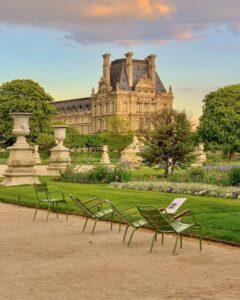
The gardens, which separate the Louvre from the Place de la Concorde, are a pleasant place for walking and culture for Parisians and tourists. The statues of Maillol sit alongside those of Rodin and Giacometti. The two ponds in the gardens are perfect places to relax. The Tuileries Garden takes its name from the tile factories that stood on the spot where Queen Catherine de Medici had the Tuileries Palace built in 1564, which has now disappeared. The famous gardener of the king, André Le Nôtre, gave it its current appearance as a French garden in 1664.
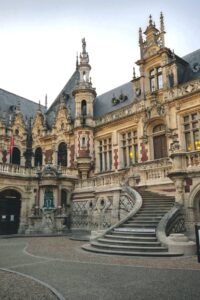
The Palace of Fontainebleau, a royal residence of the French sovereigns until the 19th century, was constantly maintained and enriched with artistic additions and is also associated with important historical events that occurred there, such as the repeal of the Edict of Nantes in 1685

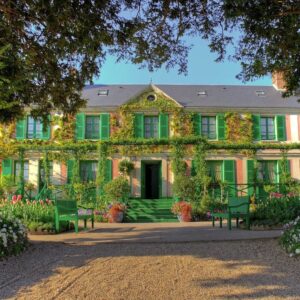
Giverny is famous for the magnificent paintings Claude Monet did of his house and gardens there. The Japanese footbridge and the water lilies all remain untouched by time. Follow in the footsteps of one of the greatest painters of the Impressionist movement. Giverny is where Monet retired and curated one of the most famous gardens in France.
data required